
The Sociology of Development section of the American Sociological Association invites nominations for three awards recognizing outstanding scholarship in the area of the sociology of development: Book Award, Faculty Article Award, and Graduate Student Paper Award. To nominate a book or paper, click HERE.
2025 AWARDS
Book Award
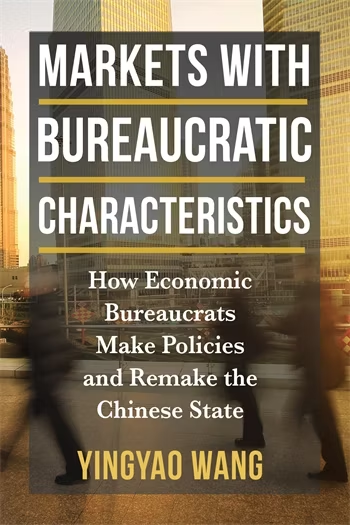
Wang, Yingyao. 2024. Markets with Bureaucratic Characteristics : How Economic Bureaucrats Make Policies and Remake the Chinese State. Columbia University Press.
In this book, Yingyao Wang presents a compelling analysis of China’s economic rise by foregrounding the important role of economic bureaucrats in shaping policy and development priorities. Challenging the conventional view of Chinese governance as rigidly top-down, Wang reveals how mid-level, second-tier bureaucrats have played a critical role in crafting and advancing distinctive “policy paradigms” that have redefined the relationship between the state and the market. The book offers valuable insight into the interpersonal dynamics, career paths, and institutional networks that influence policy formation within the bureaucracy. The book stands out for its empirical rigor and core arguments, drawing on rich biographical and interview data to substantiate its claims. Wang introduces the concept of “bureaucratic capitalism” to explain how China’s economic transformation has been shaped by the ambitions, agency, and strategic actions of mid-level officials. It is a significant contribution to the study of Chinese development.
Honorable Mentions
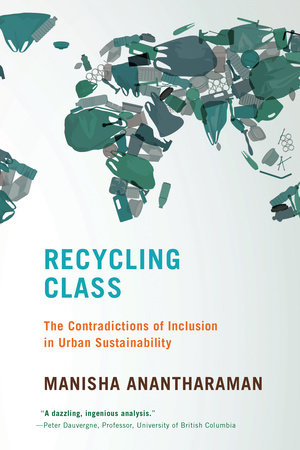
Anantharaman, Manisha. 2023. Recycling Class : The Contradictions of Inclusion in Urban Sustainability. The MIT Press.
Recycling Class offers a great contribution to our understanding of the intersections between global development and environmentalism through a rich ethnographic study of waste, labor, and infrastructure in Bengaluru, India. Manisha Anantharaman explores how local waste economies are both shaped by and actively shape global neoliberal sustainability agendas. Focusing on the rise of consumer-driven environmentalism among the urban elite, Anantharaman critically examines how this form of environmental engagement often reinforces existing social hierarchies. Through a nuanced intersectional analysis that weaves together class, caste, and gender, Anantharaman provides a powerful account of the social dynamics at play in urban sustainability initiatives. Recycling Class is a necessary intervention in debates on environmental justice, urban governance, and the politics of sustainability.
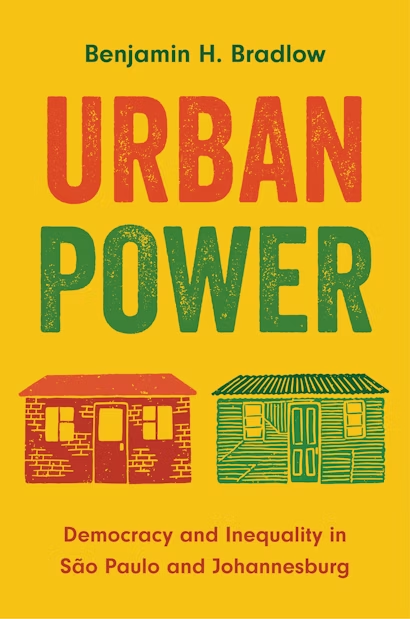
Bradlow, Benjamin H. 2024. Urban Power : Democracy and Inequality in São Paulo and Johannesburg. Princeton University Press.
Urban Power is a well-researched historical and comparative study of urban governance, focusing on the power dynamics that shape development outcomes in São Paulo, Brazil, and Johannesburg, South Africa. Bradlow skillfully examines the interplay between civil society mobilization and state institutions, showing how relationships between local government bureaucracies and urban social movements contribute to divergent paths of urban development. The book is rich in its methodological rigor, effectively combining ethnographic fieldwork, comparative-historical analysis, and quantitative statistical methods. By analyzing how local governing power is structured and exercised, Bradlow introduces the concepts of “embeddedness” and “cohesion” to explain how change occurs—through the linkage of external social movements with the capacity of local governments to implement policy reforms.
Committee: Rina Agarwala, Nikhil Deb (chair), Zophia Edwards, Ricado Jacobs, Li Zhang
Faculty Article Award
Pandian, Roshan K. 2024. “The Decline of Global Inequality in the 21st Century: Reconsidering the Industrial Transformation Thesis.” American Journal of Sociology 129(5):1493–1534. doi:10.1086/729810.
This unique study challenges a key theory about declining global inequality. Conventional wisdom holds that manufacturing drives growth and closes inequality between nations. But this research uses counterfactual simulation exercises and sectoral macroeconomic data to examine the factors driving income growth in the less industrialized countries most responsible for the decline in between-country inequality since 2000. A substantial portion of the decline in inequality is due to slower growth in wealthy nations. Moreover, past literature has overstated the role of the globalized manufacturing sector in reducing inequality. The paper is both methodologically and conceptually strong, offering clear policy and theoretical implications from the research.
Honorable Mention
Bradlow, Benjamin H. 2024. “Urban Social Movements and Local State Capacity.” World Development 173:106415. doi:10.1016/j.worlddev.2023.106415.
This paper offers new insights into the relationships between social movements and local governments, contributing to conceptions of state capacity as it responds to social movement pressure. The paper is a compelling read, with a meticulously outlined research question, method, and logic of comparison between the two cases of Brazil and South Africa. The comparative-methods logic stands out especially, as this is often a weak point in comparative-research explanations. The empirical findings are clear, and the logic of ‘development’ as an area of study is paired quite well with the equal logic of it being a ‘social movements’ paper.
Cheong, Amanda R. 2023. “Theorizing Omission: State Strategies for Withholding Official Recognition of Personhood.” Sociological Theory 41(4):377–402. doi:10.1177/07352751231206838.
This paper, focused on rights and personhood as they relate to development and inclusion, offers a critical analysis of how certain groups are ignored and omitted by the state. The paper is highly innovative, contributing to a key interest in state capacity in the sociology of development. It also provides future directions for further developing both empirical analysis and theory. Overall, it is an essential contribution to political sociology, particularly in this political moment, and to many other subfields related to development sociology, including migration, citizenship, and public health, among others.
Committee: Holly E. Reed (chair), City University of New York (CUNY); Jason Mueller, Kennesaw State University; Catherine van de Ruit, Ursinus College; Robert Wyrod, University of Colorado, Boulder
Graduate Student Paper Award
Co-Winners
Blanton, Matthew. “A Legacy of Displacement: Latent Historical Pathways of Guatemalan Migration.” Unpublished.
Matthew Blanton’s “A Legacy of Displacement: Latent Historical Pathways of Guatemalan Migration,” is an extraordinary analysis of the relationship between violence and migration. The paper begins with a surprising puzzle — that the areas in Guatemala sending migrants today are not home to significant contemporary violence, but instead were the most violent areas during the country’s bloody civil war from 1978-1985. In a study that exhibits astonishing quantitative, spatial and comparative-historical methodological sophistication, Blanton develops an equally sophisticated theoretical argument about the Latent Historical Pathways through which intergenerational experiences of violence shape migration trajectories.
Kalb, Zep. 2024. “Mobilized Resilience and Development under Sanctions in Iran.” Development and Change 55(5):933–64. doi:10.1111/dech.12859.
Zep Kalb’s “Mobilized Resistance and Development under Sanctions in Iran,” published in Development and Change, tackles an important puzzle: how did Iran maintain — and even expand — industrial output under one of the most comprehensive sanctioning regimes in the modern economy? In a study that skillfully combines economic statistics, archives, and industry-level case study, Kalb develops a model of Mobilized Resilience, to simultaneously describe both top-down and bottom-up mobilizations responding to sanctions. The results offer profound implications for how political support for worker mobilization can result in economic resilience in the face of economic sanctions.
Committee: Benjamin Bradlow (chair), Princeton University; Livio Silva-Muller, Geneva Graduate Institute; Elena Shih, Brown University
2024 AWARDS
Book Award
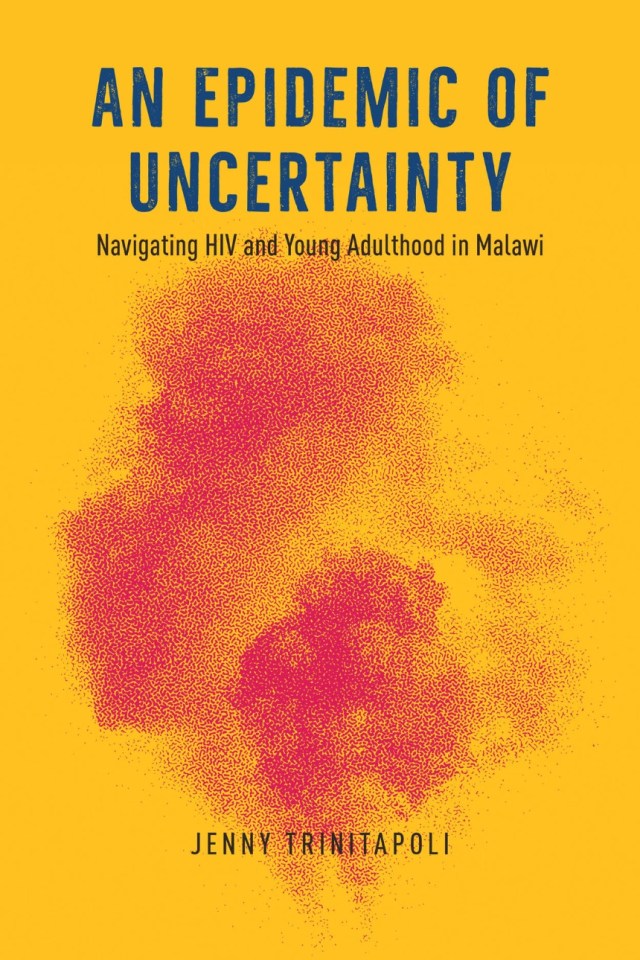
Jenny Trinitapoli. 2023. An Epidemic of Uncertainty: Navigating HIV and Young Adulthood in Malawi. University of Chicago Press
Honorable Mention

Elena Shih. 2023. Manufacturing Freedom: Sex Work, Anti-Trafficking Rehab, and the Racial Wages of Rescue. University of California Press
Faculty Article Award
Christy Thornton. 2023 “Developmentalism as Internationalism Toward a Global Historical Sociology of the Origins of the Development Project” Sociology of Development
Honorable Mention
Masoud Movahed. 2023 “Varieties of capitalism and income inequality” International Journal of Comparative Sociology
Graduate Student Paper Award
Lívio Silva-Muller “Coupling the Environmental State: Global Climate Politics in the Amazon Rainforest”
Honorable Mentions
Tracy Fehr “Nepal’s Post-Earthquake Development Surge: The Unintended Local Impacts of Reconstruction”
Priyam Saraf “Interpreting Commerce and Care: A Comparative Ethnography of Garment Firms in Bangladesh”
2023 AWARDS
Book Award
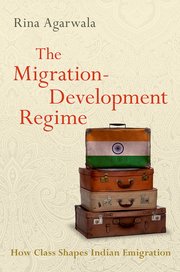
Agarwala, Rina. 2022. The Migration-Development Regime: How Class Shapes Indian Emigration Oxford University Press.
Rina Agarwala’s The Migration Development Regime offers readers a thorough analysis of India’s migration regime as a result of rich historical archive analysis and carefully conducted fieldwork. From the ancient spice route to the rise of global Indian elites, this book introduces us to a new analytical framework, “Migration-Development Regimes” (MDRs) tackling three kinds of MDRs spanning nearly two centuries. This book speaks strongly to the role of migration in domestic and international development and the contribution of class and policy in economic development inequalities. This is a book that deserves the attention of development sociologists and policymakers who want to better understand the role of migration policy in development.
Honorable Mentions

Matlon, Jordanna. 2022. A Man among Other Men: The Crisis of Black Masculinity in Racial Capitalism Cornell University Press.
Jordanna Matlon’s A Man Among Other Men is a ground-breaking exploration of how Black masculinity operates at the intersection of racial capitalism and a political economy of patriarchy. Delving into the interconnected narratives spanning the Black Atlantic, this book shows how the construction of imaginaries about Black masculinity operate in the lives of men in Abidjan, Cote D’Ivoire. With meticulous descriptions of the city’s vibrant geographies, the reader is able to experience the complexity and unfinished character of hegemonic and counter-hegemonic movements in the construction of these imaginaries. This riveting book not only revolutionizes our understanding of racial capitalism and gender, but also champions the role of media studies within ethnographic methodologies.
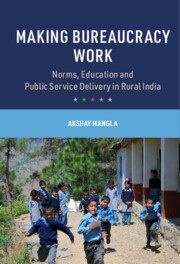
Mangla, Akshay. 2022. Making Bureaucracy Work: Norms, Education, and Public Service Delivery in Rural India Cambridge University Press.
Akshay Mangla’s Making Bureaucracy Work is the result of truly heroic fieldwork across rural India. Not only is the book a landmark in its empirical richness, but it develops a very clear comparative theoretical apparatus of deliberative and legalistic modes of bureaucratic action to explain the effectiveness of reform in delivering public education. The book speaks to classic debates in the sociology of development about bureaucratic capacity. It illustrates convincingly how the theoretical argument applies not only across both the Global South and Global North, but also across policy sectors beyond education.
Faculty Article Award
Bradlow, Benjamin H. “Embeddedness and cohesion: regimes of urban public goods distribution.” Theory and Society 51.1 (2022): 117-144.
We found this article to be an outstanding piece of work that is theoretically innovative and substantively important for the study of development. It makes effective use of within-case comparison to provide a novel theorization of how local state actors and civil society co-produce both state capacity and distributional outcomes. Although explicitly oriented toward scholarship on urban governance, the article both engages with and expands literatures on developmental states. The “embeddedness” and “cohesion” framework could easily be applied and refined
across an array of contexts and to study different kinds of development outcomes and thus will contribute to a variety of broader debates in the sociology of development and the study of the state.
Honorable Mention
Parreñas, Rhacel Salazar. “Discipline and empower: the state governance of migrant domestic workers.” American Sociological Review 86.6 (2021): 1043-1065.
This article expands on a Foucauldian approach to the exercise of state power, by further developing his concept of pastoral power and spelling out its relationship to bio-power. Based on impressive, sequential fieldwork in the Philippines, it applies this theoretical lens to the study of how sending states manage the outmigration of domestic workers. State agencies train domestic workers to be docile and not to question the authority of employers (bio-power), but also explain labor rights and establish conflict resolution mechanisms, thereby ultimately contributing to the reproduction of an overall exploitative migration system (pastoral power). The article thus not only contributes to the scholarship on international migration, but also engages with and advances the study of the state.
Graduate Student Paper Award Co-Winners
“Colorblind Racism and Market-Based Development” by Skye Niles demonstrates how the area of ‘development studies’ maintains a blind spot when it comes to the ongoing legacies of racism and colonialism in global development work. The article advances a framework capable of exploring macro-structures of racism in the world of development-work, while staying attentive to how individuals navigate their complicity-with or resistance-to the existing, racist regime of neoliberal ‘developmental aid.’ Colorblind approaches are viewed by development engineering students, presumably key actors in the future of development work, as a potential solution to racist legacies of developmental aid, but often serve to reinforce these same oppressive systems.
“What do you mean by that?”: Meanings of Solidarity for Canadian International Development Workers” by Sophia Boutilier is an innovative contribution that leverages individual-level analyses, drawing from interviews, to address big-picture questions of development. The paper provides a firsthand analysis of how the important concept of “solidarity” can be (mis)interpreted and (mis)construed by various development workers. By connecting an interrogation of the ethics of solidarity with an interest in semiotic processes of meaning-making, Boutilier contributes to our understanding the moral and discursive dimensions of how development workers in the global North do and understand their work.
2022 AWARDS
Book Award

Iskander, Natasha. 2021. Does Skill Make Us Human? Princeton University Press.
The committee noted the book’s contribution to thinking about the grammar, politics, and power of skill and its far-reaching implications for how we understand human existence. In addition to the elegant writing, the committee noted that the book is theoretically creative, rigorous, and deeply reflective of the lived experiences of a wide array of social, political, and economic actors in and outside the case of Qatar. The breadth of the data collection and ability to tell a complex, multi-faceted organizational system was truly impressive.
Honorable Mention

Veeraraghavan, Rajesh. 2021. Patching Development: Information Politics and Social Change in India. Oxford University Press.
The committee noted how skillfully the book engaged the participatory development literaturesto deliver a clever, careful study design of NREGA in Andrha Pradesh. Dr. Veeraraghavan shows us how key state and society actors “patch” development in the last mile of project implementation with a focus on information technologies. The committee was particularly impressed by how exceptionally designed, innovative, and empirically rich the book is. The book complicates our understanding of public service delivery to understand the promise and pitfalls of social change.
Faculty Article Award
Michael Goldman and Devika Narayan. 2021. “Through the Optics of Finance: Speculative Urbanism and the transformation of Markets.” International Journal of Urban and Regional Research 45(2):209-231.
The committee found that the authors had accomplished the challenging task of writing on a double register so as to present empirical findings that both mattered for their particular case and were readily transformable into insights applicable for development researchers. They moreover noted the substantial takeaway, that southern
economies are not inevitable – or non-agential – sites of financial domination, but rather themselves composed of dominating forces acting within transnational and supranational networks of speculation and finance. Lauding its outstanding analysis of a complex and often opaque set of processes and extensive research with difficult-to-reach actors, the committee was convinced of the paper’s significant implications for (under)development certain be read widely in the field.
Honorable Mentions
Chang, Andy. 2021. “Selling a Resume and Buying a Job: Stratification of Gender and Occupation by States and Brokers in International Migration from Indonesia.” Social Problems 68(4):903-924.
The committee was incredibly impressed by the quality of the Chang’s extensive and multi-sited fieldwork and theoretical scope, in which he convincingly established the relative standing of host and sender nations while also exploring the role of gender difference among migrant domestic workers and migrant factory workers.
Roychowdhury, Poulami. 2021. “Incorporation: Governing Gendered Violence in a State of Disempowerment.” American Journal of Sociology126(4):852-888.
The committee also remarked on Roychowdhury’s significant advance to scholarship on state capacity through the lens of the postcolonial state’s response to gender violence. Her paper provided insights into how into how police serve (or not) non-idealized victims of violence as well as how outsiders are incorporated into policy implementation processes; in doing so she identified how politics, power, and resource constraints legitimate violence and affect state enforcement and regulation.
Graduate Student Paper Award
Herrera, Joel S. & Martinez-Alvarez, Cesar B. “Diversifying Violence: Mining, Export-Agriculture, and Criminal Governance in Mexico.”
This article was published by the journal World Development in March 2022. The committee noted Herrera and Martinez-Alvarez’s fascinating and innovative research question regarding how criminal organizations in Mexico are diversifying their streams of revenue and territorial control beyond the drug market. The paper brilliantly combines resource curse literature and criminology. The committee commended the ingenious and excellent mixed methods design (used to explore the link between natural resources and violence in Mexico) that provided compelling cross-source support for the authors’ conclusions. The authors have conducted excellent fieldwork in a very dangerous setting. Their economic analysis is unprecedented in discussions of crime in the Global South.
Honorable Mention
Feng, Kai. “Unequal Duties and Unequal Retirement: Decomposing the Women’s Labor Force Decline in Post-Reform China.”
This paper is an important contribution to the literature on gender and work in China, as retirement discrimination is a key part of the dynamics of gender differentials in general in the East Asian labor market. The committee stated that Feng’s paper is a well-researched analysis of how early retirement policies are affecting the gender gap in labor force participation in China despite women’s high educational levels and the country’s fast economic growth.
2021 AWARDS
Book Award
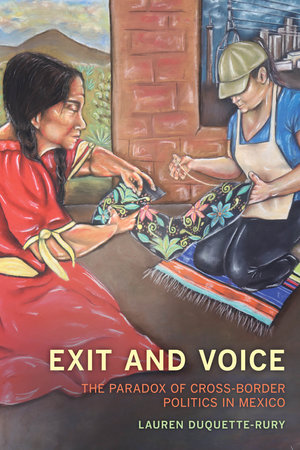
Duquette-Rury, Laura. 2019. Exit and Voice: The Paradox of Cross-Border Politics in Mexico. Berkeley, CA: University of California Press.
“Exit and Voice: The Paradox of Cross-Border Politics in Mexico” is a nuanced study of migrant hometown associations on local governance and development in Mexico. In drawing attention to the transnational work of HTAs, the book complicates our existing understanding of the state-social contract, reinterpreting classical theory on migration and development in bold new ways. It is a sophisticated mixed methods study that maximally demonstrates how the qualitative and quantitative can complement one another, and provides fascinating on-the-ground observations of the processes leading to emigrants’ reinvestment in hometown development.
Honorable Mention

Chuang, Julia. 2020. Beneath the China Boom: Labor, Citizenship, and the Making of a Rural Land Market. Berkeley, CA: University of California Press.
“Beneath the China Boom: Labor, Citizenship, and the Making of a Rural Land Market” is an extraordinary analysis of the hidden urban-rural and state-local policies and circuits of labor underlying China’s economic development. Through a rich ethnography, the book demonstrates how rural villagers’ lives and livelihoods were deeply impacted by violent evictions, circular migration, and officialdom’s political machinations. The book points to important paradoxes in the Chinese case that upend commonly held assumptions in the literature. “Beneath the China Boom” has broad implications for scholars of migration, work, development, gender, and rural sociology.
Faculty Article Award
Doering, Laura and Kristen McNeill. 2020. “Elaborating on the Abstract: Group Meaning-Making in a Colombian Microsavings Program.” American Sociological Review 85(3):417-450.
This article focuses on a government-sponsored microsavings program in Colombia. Drawing on a national survey that pinpointed a puzzle – the trend that despite increased financial inclusion, participants tended to lose interest in formal products throughout their participation in the program. To further understand this puzzle, the authors conducted 105 interviews and two years of observations from 28 savings group meetings across three cities. The authors solve this puzzle of why inclusion in the program resulted in losing interest through the organizational mechanisms. For the organization to dissemination program information across different groups of people, they had to abstract the information so it is consistent, and that the information was “timeless, placeless, and without context.” But because this information is so abstract, people then engaged in what the authors call “elaborating on the abstract,” whereby people shared personal (often negative) experiences, second-hand stories and information, and “coloring in neutral facts with negative emotional and moral values.” Thus, the very process that the organization engaged in, in order to reach so many people – providing information that can be used across settings – ends up being detrimental in practice as the information is divorced from on-the-ground practice. We found this article to be rich in both theory and empirics, shifting our understanding of microsavings programs at multiple levels of analysis. It is sure to be read, cited, and influence development policy and research for years to come.
Garrido, Marco. 2020. “Democracy as Disorder: Institutionalized Sources of Democratic Ambivalence among the Upper and Middle Class in Manila.” Social Forces 99(3):1036–1059.
Why are democracies “backsliding” and their practices under attack? Drawing on 81 interviews, months of fieldwork in middle-class houses and civic associations, several years of ethnographic research in Metro Manila, the author posits a novel argument. Rather than democracy eroding because of weak political institutions and bad governance, the author pinpoints institutional contradictions as the key to understanding this problem. Participants saw democracy as amplifying disorder due to corruption, rule-bending, clientelism and informal settlements. The turn to “discipline” and “disciplining” democracy in order to address disorder better helps us see democratic backsliding as the result of institutional contradictions as moral dilemmas. We found this article to be rich in both theory and empirics, presenting a novel argument about how and why democratic backsliding occurs.
Honorable Mention
Levenson, Zachary. 2019. “‘Such elements do not belong in an ordered society’: Managing rural–urban resettlement in democratic South Africa.” Journal of Agrarian Change 19(3):427-446.
What are the factors that drive dispossession, and the rationales that are mobilized to explain it? The author draws on 17 total months of fieldwork and interviews with housing officials, non-governmental officials, activists and lawyers to understand this question in the context of the “impossible situation” that has arisen in postapartheid South Africa: the end of racialized restrictions on migration, the ensuing shortage in formal housing in urban areas, and the government’s constitutional obligation to guarantee citizens’ right to adequate housing. The author argues that pointing to neoliberal logics is insufficient for understanding why the government chooses to evict land occupiers. Rather, governmental rationales for pursuing evictions in post-apartheid South Africa must be understood with regard to “the contingencies of democratic politics.” Government officials discursively create moralizing distinctions between patient, deserving citizens who are on a wait list for housing and those “unruly queue jumpers” who threaten democracy. Housing officials focus on those “queue jumpers” as a cause of the housing crisis and policing of land occupations, rather than a consequence of institutionalized inequities. We found this article to be richly engaging in its ethnographic insight as well as its theorizing, helping us to better understand how dynamics of neoliberalism and democratization affect the allocation of rights, such as housing, among citizens.
Graduate Student Paper Award
Urbina, Daniela R. “Mass Education and Women’s Autonomy: Evidence from Latin America.”
In this sophisticated paper Daniela leverages the differential timing of compulsory school reforms in Bolivia, Colombia, and Peru in an instrumental variable design to investigate the effect of mass schooling reforms in women’s autonomy in families. She finds that while women’s education is associated with greater autonomy, as education systems expand, these returns are increasingly diminished. She proposes that these results are partly explained by changes in the selection into schooling and the effects of women’s education on their marriage patterns. Therefore, for vulnerable groups complying with compulsory reforms, further schooling did not fulfill the promise of empowerment. Together, these results highlight the importance of examining the differential returns to mass schooling and the threatening meaning of women’s education in high gender inequality contexts.
Honorable Mention
Falzon, Danielle. “The Ideal Delegation: How Institutional Privilege Silences ‘Developing’ Nations in the UN Climate Negotiations.”
In this important article, forthcoming in Social Problems, Danielle makes an important contribution to our understanding of how development ideals shape global governance on urgent issues such as climate change. She utilizes an institutional lens to argue that idealized national delegations to the UN climate negotiations are from large, English-speaking countries that leverage Western scientific and legal expertise and that have the financial resources to send the same negotiators year after year. In this way, countries that more vulnerable to the impacts of climate change are most discounted in negotiations to decide how the world should address climate change. The paper makes a clear and strong connection between macro-level theoretical questions of global power asymmetries, meso-level insights on institutional practices, and micro-sociological insights on how the “lived experiences” of UN delegates reflect and refract (pre)existing world scale social relations.
2020 AWARDS
Book Award

Bobel, Chris. 2019. The Managed Body: Developing Girls & Menstrual Health in the Global South. London, UK: Palgrave Macmillan.
The Managed Body productively complicates ‘menstrual hygiene management’ (MHM)—a growing social movement to support menstruating girls in the Global South. Bobel offers an invested critique of the complicated discourses of MHM including its conceptual and practical links with the Water, Sanitation and Hygiene (WASH) development sector, human rights and ‘the girling of development.’ Drawing on analysis of in-depth interviews, participant observations and the digital materials of NGOs and social businesses, Bobel shows how MHM frames problems and solutions to capture attention and direct resources to this highly-tabooed topic. She asserts that MHM organizations often inadvertently rely upon weak evidence and spectacularized representations to make the claim of a ‘hygienic crisis’ that authorizes rescue. And, she argues, the largely product-based solutions that follow fail to challenge the social construction of the menstrual body as dirty and in need of concealment. While cast as fundamental to preserving girls’ dignity, MHM prioritizes ‘technological fixes’ that teach girls to discipline their developing bodies vis a vis consumer culture, a move that actually accommodates more than it resists the core problem of menstrual stigma.

Tarlau, Rebecca. 2019. Occupying Schools, Occupying Land: How the Landless Workers Movement Transformed Brazilian Education. Global and Comparative Ethnography series. Oxford, UK: Oxford University Press.
Contrary to the conventional belief that social movements cannot engage the state without becoming co-opted and demobilized, this study shows how movements can advance their struggles by strategically working with, in, through, and outside of state institutions. The success of Brazil’s Landless Workers Movement (MST) in occupying land, winning land rights, and developing alternative economic enterprises for over a million landless workers has made it an inspiration for progressive organizations globally. The MST’s educational initiatives, which are less well known but equally as important, teach students about participatory democracy, collective work, agroecological farming, and other practices that support its socialist vision. This study details how MST activists have pressured municipalities, states, and the federal government to implement their educational proposal in public schools and universities, affecting hundreds of thousands of students. Based on twenty months of ethnographic fieldwork, Occupying Schools, Occupying Land documents the potentials, constraints, failures, and contradictions of the MST’s educational struggle. A major lesson is that participating in the contentious co-governance of public education can help movements recruit new activists, diversify their membership, increase practical and technical knowledge, and garner political power. Activists are most effective when combining disruption, persuasion, negotiation, and co-governance into their tactical repertoires. Through expansive leadership development, the MST implemented its educational program in local schools, even under conservative governments. Such gains demonstrate the potential of schools as sites for activists to prefigure, enact, and develop the social and economic practices they hope to use in the future.
Faculty Article Award
Reyes, Victoria. 2018. “Port of Call: How Ships Shape Foreign-Local Encounters.” Social Forces, 96 (3): 1097–1118.
Paret, Marcel. 2018. “Critical Nostalgias in Democratic South Africa.” The Sociological Quarterly, 59 (4): 678-696.
Honorable Mention
Ballakrishnen, Swethaa. 2019. “Just Like Global Firms: Unintended Gender Parity and Speculative Isomorphism in India’s Elite Professions.” Law & Society Review, 53 (1): 108-140.
Graduate Student Paper Award
Annavarapu, Sneha. “Risky Routes, Safe Suspicions: Gender, Class, and Cabs in Hyderabad, India.”
Honorable Mention
Utama, Rahardhika Arista. “Embedded Peasantry: Path-Dependence and Economic Transformation in Indonesia and Malaysia.”
2019 AWARDS
Book Award

Levien, Michael. 2018. Dispossession without Development: Land Grabs in Neoliberal India. Oxford University Press.
Since the mid-2000s, India has been beset by widespread farmer protests against “land grabs.” Dispossession without Development argues that beneath these conflicts lay a profound transformation in the political economy of land dispossession. While the Indian state dispossessed land for public-sector industry and infrastructure for much of the 20th century, the adoption of neoliberal economic policies since the early 1990s prompted India’s state governments to become land brokers for private real estate capital—most controversially, for Special Economic Zones (SEZs). Using long-term ethnographic research, the book demonstrates the consequences of this new regime of dispossession for a village in Rajasthan. Taking us into the diverse lives of villagers dispossessed for one of North India’s largest SEZs, it shows how the SEZ destroyed their agricultural livelihoods, marginalized their labor, and excluded them from “world-class” infrastructure—but absorbed them into a dramatic real estate boom. Real estate speculation generated a class of rural neo-rentiers, but excluded many and compounded pre-existing class, caste, and gender inequalities. While the SEZ disappointed most villagers’ expectations of “development,” land speculation fractured the village and disabled collective action. The case of “Rajpura” helps to illuminate the exclusionary trajectory of capitalism that underlay land conflicts in contemporary India—and explain why the Indian state is struggling to pacify farmers with real estate payouts. Using the extended case method, Dispossession without Development advances a sociological theory of dispossession that has relevance beyond India.

Berry, Marie E. 2018. War, Women, and Power: From Violence to Mobilization in Rwanda and Bosnia-Herzegovina. Cambridge University Press.
Rwanda and Bosnia both experienced mass violence in the early 1990s. Less than ten years later, Rwandans surprisingly elected the world’s highest level of women to parliament. In Bosnia, women launched thousands of community organizations that became spaces for informal political participation. The political mobilization of women in both countries complicates the popular image of women as merely the victims and spoils of war. Through a close examination of these cases, Marie E. Berry unpacks the puzzling relationship between war and women’s political mobilization. Drawing from over 260 interviews with women in both countries, she argues that war can reconfigure gendered power relations by precipitating demographic, economic, and cultural shifts. In the aftermath, however, many of the gains women made were set back. This book offers an entirely new view of women and war and includes concrete suggestions for policy makers, development organizations, and activists supporting women’s rights.
Faculty Article Award
Long, Yan. 2018. “The Contradictory Impact of Transnational AIDS Institutions on State Repression in China, 1989-2013,” American Journal of Sociology, 124, no. 2 (September 2018): 309-366.
Honorable Mention
Lu, Yao. “Empowerment or Disintegration? Migration, Social Institutions, and Collective Action in Rural China.”
Graduate Student Paper Award
Souza Leão, Luciana. “Optics of the State: The Politics of Making Poverty Visible in Brazil and Mexico.”
Honorable Mention
Vallejo, Catalina. “Economic Reparations, Entrepreneurship, and Post-Conflict Development: Evidence from Colombia.”
2018 AWARDS
Book Award

Kwan Lee, Ching. 2017. The Specter of Global China: Politics, Labor, and Foreign Investment in Africa. University of Chicago Press.
China has recently emerged as one of Africa’s top business partners, aggressively pursuing its raw materials and establishing a mighty presence in the continent’s booming construction market. Among major foreign investors in Africa, China has stirred the most fear, hope, and controversy. For many, the specter of a Chinese neocolonial scramble is looming, while for others China is Africa’s best chance at economic renewal. Yet, global debates about China in Africa have been based more on rhetoric than on empirical evidence. Ching Kwan Lee’s The Specter of Global China is the first comparative ethnographic study that addresses the critical question: Is Chinese capital a different kind of capital?
Offering the clearest look yet at China’s state-driven investment in Africa, this book is rooted in six years of extensive fieldwork in copper mines and construction sites in Zambia, Africa’s copper giant. Lee shadowed Chinese, Indian, and South African managers in underground mines, interviewed Zambian miners and construction workers, and worked with Zambian officials. Distinguishing carefully between Chinese state capital and global private capital in terms of their business objectives, labor practices, managerial ethos, and political engagement with the Zambian state and society, she concludes that Chinese state investment presents unique potential and perils for African development. The Specter of Global China will be a must-read for anyone interested in the future of China, Africa, and capitalism worldwide.
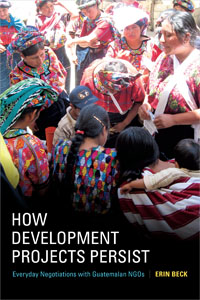
Beck, Erin. 2017. How Development Projects Persist: Everyday Negotiations with Guatemalan NGOs. Duke University Press.
In How Development Projects Persist Erin Beck examines microfinance NGOs working in Guatemala and problematizes the accepted wisdom of how NGOs function. Drawing on twenty months of ethnographic fieldwork, she shows how development models and plans become entangled in the relationships among local actors in ways that alter what they are, how they are valued, and the conditions of their persistence. Beck focuses on two NGOs that use drastically different methods in working with poor rural women in Guatemala. She highlights how each program’s beneficiaries—diverse groups of savvy women—exercise their agency by creatively appropriating, resisting, and reinterpreting the lessons of the NGOs to match their personal needs. Beck uses this dynamic—in which the goals of the developers and women do not often overlap—to theorize development projects as social interactions in which policymakers, workers, and beneficiaries critically shape what happens on the ground. This book displaces the notion that development projects are top-down northern interventions into a passive global south by offering a provocative account of how local conditions, ongoing interactions, and even fundamental tensions inherent in development work allow such projects to persist, but in new and unexpected ways.
Faculty Article Award
Erin Metz McDonnell, “Patchwork Leviathan: How Pockets of Bureaucratic Governance Flourish within Institutionally Diverse Developing States,” American Sociological Review 82(3):476-510. 2017.
Honorable Mention
Cihan Tuğal, “The Uneven Neoliberalization of Good Works: Islamic Charitable Fields and Their Impact on Diffusion,” American Journal of Sociology 123(2):426-464. 2017.
Graduate Student Paper Award
Joel S Herrera, University of California, Los Angeles, “Cultivating Violence: Trade Liberalization, Labor Informality, and the Mexican Drug Trade.”
Honorable Mention
Alvin A. Camba, Johns Hopkins University, “The Contentious Politics of Capital: The Political Economy of Chinese Investments in the Philippines.”
Anjuli N. Fahlberg, Northeastern University, “Activism under Fire: Urban Governance and Citizenship in Rio de Janeiro’s Conflict Zones.”
Samuel Cohn Distinguished Service Award
2018: Matthew Sanderson, Kansas State University
2017 AWARDS
Book Award
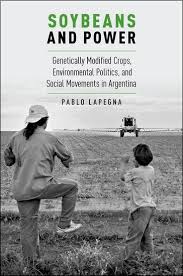
Lapegna, Pablo. 2016. Soybeans and Power: Genetically Modified Crops, Environmental Politics, and Social Movements in Argentina. Oxford University Press.
In our field, we talk about transcending scales in our field, and this text certainly captures that larger goal, as it starts with the transformative power of a soybean! This book is one of those beautifully written ethnographies that makes us feel like our field can brush shoulders with literature. While presenting such an eloquent ethnography, Lapegna also presents what Marc Edelman called “a magisterial contribution to social movement theory and the critical history of commodities.” Our committee note this text’s exceptional capacity to capture the complex intersections of development and social movements with an empathetic lens into the daily struggles of communities in Argentina; who are both most adversely impacted by Genetic Modification technology and at the forefront of new forms of resistance enacted in order to survive.
Honorable Mentions

McDonnell, Terence. 2016. Best Laid Plans: Cultural Entropy and the Unraveling of AIDS Media Campaigns. University of Chicago Press.
In this innovative text, McDonnell traces the proliferation of global media campaigns on HIV/AIDS with their eventual local collapse. Through processes of cultural entropy the intended meanings of development agencies fall flat in the communities that absorb the messaging of such popularized issues. Through his ability to engage theories of culture, development, organizational sociology and global health in both urban and media scapes, Wendy Griswold noted that this book “offers an entirely fresh view of cities in all their semiotic multiplicity” and “changes the way we see the world” from a development perspective.
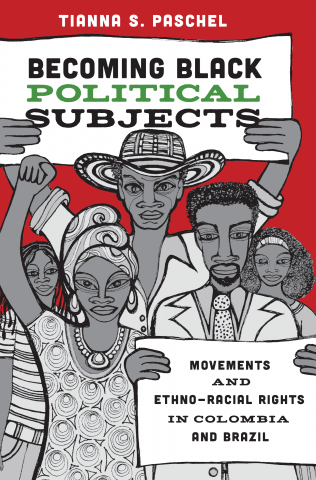
Paschel, Tianna S. 2016. Becoming Black Political Subjects: Movements and Ethno-Racial Rights in Colombia and Brazil. Princeton University Press.
In this piece Paschel analyzes the ethno-racial legislation of Brazil and Columbia over the past 40 years through the voices and collective agency of black activist movements who worked in contexts of severe unrest and the simultaneous growing interest of the inter-national community. Michael Hanchard lauded Paschel’s ability to “ferret out the tensions between activists and organizations identified with state power on the one hand, and more popular forms of consciousness raising and mobilization on the other. Conceptually innovative, methodologically rigorous, and wide-ranging, this book is an extraordinary piece of scholarship.”
Faculty Article Award
Levien, Michael. 2015. “Social Capital as Obstacle to Development: Brokering Land, Norms, and Trust in Rural India.” World Development 74: 77-92.
The committee reviewed 33 articles covering an impressive array of topics related to the sociology of development. Both the winner and honorable mention articles offer remarkable data-based theoretical insights on key issues for soci-ology of development.
The award goes to Michael Levien’s 2015 article from World Development, “Social Capital as Obstacle to Development: Brokering Land, Norms, and Trust in Rural India.” This article presents a deeply sociological critique of the under-standing of social capital as stocks of networks (as put forth by Putnam and most political scientists), and uses rich ethnographic data from rural India to demonstrate that social capital reproduces inequality, thus complicating the pro-cess of inclusive development. For those rusty on, or unfamiliar with, social capital, the article offers a clear explanation of different perspectives from sociology and political science, while for those aware of the nuances, it offers a modern application of Bourdieu to a compelling case.
Karataşlı, Şahan Savaş. 2017. “The Capitalist World-economy in the Longue Durée: Changing Modes of the Global Distribution of Wealth, 1500–2008.” Sociology of Development 3(2): 163-96.
Honorable mention goes to Sahan Karatasli’s 2017 article from Sociology of Development, “The Capitalist World-economy in the Longue Durée: Changing Modes of the Global Distribution of Wealth, 1500–2008.” This article directly addresses one of the fundamental questions that has animated the sociology of development from the get-go, namely the nature of global inequality. It is a fascinating and convincing analysis of the transformations of capitalist world system from the 16th century onwards that shows the trimodal (core-semiperiphery-periphery) structure of the capitalist world-econ-omy that characterized most of the 20th century has in the 21st century transformed into a new quadrimodal (i.e., four-tiered) structure. Karatasli concludes that changes in the number of modes are due to crises of world hegemony.
Graduate Student Paper Award
Rosaldo, Manuel. 2016. “Revolution in the Garbage Dump: The Political and Economic Foundations of the Colombian Recycler Movement, 1986 – 2011.” Social Problems 63: 351-372.
This year’s Graduate Student Paper Award goes to Manuel Rosaldo (University of California-Berkeley) for his article, “Revolution in the Garbage Dump: The Political and Economic Foundations of the Colombian Recycler Movement, 1986 – 2011,” appearing in Social Problems. Manuel’s study challenges conventional thinking by demonstrating that work-ers in the informal sector are able to effectively mobilize and confront the state in order to assert their rights. In particular, three mechanisms facilitated the Colombian recyclers’ organizational capacity, including (1) technical and financial assistance from civil society actors, especially non-governmental organizations, (2) legal victories that chal-lenged state policy, leading to greater recognition of recycler rights, and (3) privatization of waste management, which provided new opportunities for recyclers to enter into the formal sector. With respect to this final mechanism, Manuel again challenges conventional wisdom. Rather than framing neoliberalism as an oppressive force, Colombian recyclers seized this transformative moment as an opportunity to bid for formal contracts. Overall, this is an excellent piece of scholarship that will be of great interest to those studying labor movements and social change, especially within the context of developing nations in the Global South.
2016 AWARDS
Book Award

Swider, Sarah. 2015. Building China: Informal Work and the New Precariat. Ithaca, NY: Cornell University Press.
The award committee considers Building China to be a groundbreaking study on a population that is often invisible in scholarly and policy work on development—i.e. informal, migrant construction workers. Although the construction industry has been widely acknowledged as instrumental in China’s recent economic boom, we know oddly little about the lives and livelihoods of construction workers. Drawing from a deep and extensive ethnography where the author lived and worked in several construction sites across China, as well as 83 interviews with migrants, managers, and labor contractors, Swider sheds light on the structures, processes, and various actors building modern-day China. Swider illustrates how the Chinese state brokers migrant labor to build China’s shiny new cities, as well as how contemporary workers are redefining and reshaping labor movements to resist their exclusion from the very cities they built. Perhaps most noteworthy is the new theoretical framework this book offers. Rather than (re)exposing what has now become a common point (i.e. that formal work is declining and informal or precarious work is increasing), Swider deepens our conceptualization of informal or precarious work through her original and useful concept of the “employment configuration”. The concept of employment configurations differentiates types of informal work based on (1) pathways into employment and (2) mechanisms regulating the employment relationship. It rejects the idea that informal work is “unregulated” and categorizes work based on non-state mechanisms of regulation. In doing so, it pushes us past increasingly outdated and dichotomous frameworks (i.e. formal vs. informal work) to include the wide range of diverse employment relationships that characterize the world’s economies today. For development scholars of China and beyond, this book is a must read.
Honorable Mention

Almeida, Paul. 2014. Mobilizing Democracy: Globalization and Citizen Protest. Baltimore: Johns Hopkins University Press.
The award committee enthusiastically endorses Mobilizing Democracy for its methodological sophistication and for its contributions to the intersection of social mobilization and national development. The book examines six countries in Central America to explain why communities respond differently to the effects of globalization and neo-liberal capitalist liberalization policies. Drawing from the extensive comparative case studies and multiple field interviews, the author develops an analytical framework consisting of how democratic transitions, perceptions of economic risks, and state-society linkages in each nation influence the social composition and strategies of oppositional coalitions. Rich in empirical data and a strong conceptual framework, the book sheds new light on the nature of agency in development processes and makes a significant contribution to how communities respond to global forces.
Faculty Article Award
Singh, Prerna. 2015. “Subnationalism and Social Development: A Comparative Analysis of Indian States.” World Politics 67(3)/July: 506-562.
Using statistical analyses and historical case comparisons, this article identifies solidarity that emerges from a shared collective identity, or subnationalism, as an important contributor to social policy and welfare outcomes in various states in India. Singh argues that an overarching subnational identity facilitates a sense of shared interests and mutual commitments among individuals from divergent subgroups as it did in the state of Kerala. These individuals, therefore, are more likely to support policies that enhance collective welfare. By contrast, in states where there is a lack of an overarching subnational identity, such as in Uttar Pradesh, the sense of mutual commitment is limited to coethnics, and not to all members of the subnational community. In such states, the political elite are more likely to introduce policies that target their particular ethnic group and not everyone in the state.
Singh’s argument moves away from the dominant view in welfare scholarship of the negative impact of collective identity. By highlighting how class mobilization succeeds when embedded in subnationalism, as it did in Kerala, and fails when there is no overarching subnationalism as in Uttar Pradesh, Singh also provides nuance to the argument on class mobilization and collective welfare. Singh’s argument has important policy implications as she demonstrates how engaging subnational collective identities – through a state language, celebration of festivals and state heroes – can bring development policy in conversation with a larger arts and cultural context and can further social policy and development. Well written with empirical, conceptual, and theoretical contributions, it was an unanimous first choice of all members of the committee.
Graduate Student Paper Award
Roshan Kumar Pandian for his paper “Does Manufacturing Matter for Economic Growth in the Era of Globalization?”
Pandian’s paper adjudicates between two competing perspectives concerning the importance of manufacturing employment for economic growth in the last two decades. Some scholars have argued that global restructuring and the new “international division of labor” presents novel opportunities for economic growth in the Global South, while others have argued that the importance of economic growth for developing countries has declined during this period as competitive pressures increase and barriers decline, motivating a “race to the bottom.” But previous research has not looked at the importance of manufacturing over time, nor has it compared developed and developing countries in the same analysis. In so doing, Pandian finds that manufacturing exerts a strong, positive effect on growth in all countries, but how this effect plays out over time is variable. In developed countries, the effects of manufacturing on economic growth are consistently strong, but in developing countries, the importance of manufacturing does indeed decline after 1990. In this way, Pandian carefully and intelligently mediates between two long-competing hypotheses in Economic Development, and finds that the answer actually is more complicated than what either side had actually postulated. This beautifully written and thoughtfully analyzed paper is expected to be a central read for all economic development scholars in the future.
Honorable Mention
Mohammad Ali Kadivar for his paper “Mass Mobilization and the Durability of New Democracies.”
In his paper, Kadivar empirically examines 112 new democracies over the past half-century and finds that, contrary to Huntington’s long-standing claims, new democracies that grow out of mass mobilizations are MORE LIKELY to survive than new democracies that did not. Of these mass mobilizations, UNARMED uprisings are more likely to endure than any other kind of democratic transition. He then deepens his empirical analysis with five case studies that investigate the mechanisms accounting for this relationship, and he concludes that mass mobilizations lead to stable new democracies because they require the emerging opposition to create organizational structures for leadership that translate easily into formal politics, and they forge links between this transitioning leadership and civil society, thus providing checks on the power of the post-transition government. Beautifully written, elegantly analyzed, and with transformative findings, this paper will certainly be published in a top peer review article in the very near future.
2015 AWARDS
Book Award

Sanyal, Paromita. 2014. Credit to Capabilities: A Sociological Study of Microcredit Groups in India. New York: Cambridge University Press.
The award committee considers Credit to Capabilities to be a groundbreaking study of a much-discussed but under-researched topic. The book provides a systematic examination of the relationship between microcredit groups and women’s agency through a detailed analysis of over two microcredit programs in India. The author draws on over 400 interviews to open the ‘black box’ of the assumed relationships between microcredit and women’s agency. Sanyal explores two mechanisms in particular, the financial and associational aspects of microcredit programs and argues that the latter is what provides positive returns for women’s positions in society. The book is richly detailed and beautifully written, delivering a grounded view of the social situation in which women live as well as the impacts of microcredit and the total experience of the women in these groups. Credit to Capabilities offers a theory of agency that underscores the ways in which women carve out autonomous spaces in the context of gender and social exploitation and material deprivation. Linking the analysis to the scholarly debates on gender inequalities, Amartya Sen’s theory of capabilities, and economic sociology, the book speaks to audiences both in and outside of development sociology including scholars interested in microcredit, gender, institutions, and livelihoods. The policy applications for practitioners are also clear: it is important to strengthen the means of enhancing the associational mechanisms of microcredit groups. For audiences from the local to the national level as well as to practitioners working in developmental agencies, local microcredit groups, and even banks that underwrite microcredit programs, Credit to Capabilities provides insights on decision-making processes, the broader social and economic contexts in which these decisions are situated, and the consequences on people’s lives.
Honorable Mention

Krause, Monika Sabine. 2014. The Good Project: Humanitarian Relief and the Fragmentation of Reason. Illinois: Chicago University Press.
The award committee enthusiastically endorses The Good Project, a book that focuses on humanitarian work conducted by International Non-Governmental Organizations (NGOs). Krause investigates the logic and practices of humanitarian NGOs through interviews with 50 managers at 16 of the largest NGOs; she argues that humanitarian work should be understood as a form of production and that aid agencies operate in a quasi-market where they are “selling” their projects to donors and the general public. The resulting search for “the good project” highlights the constructed nature of the relationship between production, consumption and crisis. Krause presents the perspective of workers in the humanitarian field with real insight, sympathy and rigor. The book also discusses the under-appreciated distinction between NGOs that work in “development” and NGOs that work in humanitarian or relief work. Rich in detailed theory and empirics, the book makes an important and fascinating intervention into the literature on aid, revealing the logic of humanitarian relief and the structural conditions necessary for this logic to exist, arguing for new politics of organizational practice.
Faculty Article Award
Hetland, Gabriel. 2014. “The Crooked Line: From Populist Mobilization to Participatory Democracy in Chavez-Era Venezuela,” in Qualitative Sociology 37(4): 373-401.
This article examines how participatory democracy works in two Venezuelan municipalities. It shows that participatory governance can be successful in cities governed by Left and Right parties and in contexts where civic associations lack full autonomy from the state and ruling party. It explains these unexpected findings as indirect consequences of populist mobilization. Specifically, Hetland argues that a populist regime might instigate a grassroots backlash in which a post-populist regime takes on board the unfulfilled expectations generated by its populist predecessor. In so doing, it challenges the “incompatibility” thesis of populism and democracy and revisits some of the central claims in the participatory democracy literature, that successful participatory democracy requires a Left party. Methodologically, the case selection is persuasive, the analysis pays close attention to temporal sequences and events and makes good use of ethnographic methods such as interviews and participant observation.
Honorable Mention
Hsu, Becky. 2014. “Alleviating Poverty or Reinforcing Inequality: Interpreting Microfinance in practice, with illustrations from China,” in The British Journal of Sociology 65(2): 245-265.
Student Paper Award
This year the ASA Section on Development Sociology acknowledged excellence in graduate student research to three young scholars: Julia Behrman and Abigail Weitzman (both of NYU), and Gowri Vijaykumar (University of California- Berkeley).
Behrman and Weitzman’s paper, “The Effects of Severe Natural Disaster on Fertility: Evidence from the 2010 Haiti Earthquake” used a carefully designed methodological approach to examine this important issue. Their main finding, that contraceptive access is significantly impeded during post-natural disaster periods, makes a strong contribution to the emerging field of population, development and environment. This paper was presented at the 2015 meeting of the Population Association of America.
Vijaykumar’s paper, “‘I’ll Be Like Water: Gender, Class, and Flexible Aspirations at the Edge of India’s Knowledge Economy” is a masterful analysis that examines the ways in which ideologies of aspiration, inclusion, and women’s empowerment associated with India’s globalizing knowledge economy are re-framed by young women workers in a small-town business-process outsourcing (BPO) center two hours outside of Bangalore. This paper was published in December 2013 in Gender and Society 27(6): 777-798.
2014 AWARDS
Book Awards

Rina Agarwala. 2013. Informal Labor, Formal Politics, and Dignified Development in India. Cambridge University Press.
Faculty Article Award
Lant Pritchett, Michael Woolcock, and Matt Andrews, all of Harvard Kennedy School, “Looking Like a State: Techniques of Persistent Failure in State Capability for Implementation,” The Journal of Development Studies 49(1):1-18. 2013.
Graduate Student Paper Award
Diana Rodríguez-Franco, Northwestern University, “Internal Wars, Taxation, and State Building,” American Sociological Review 81(1):190-213.
Samuel Cohn Distinguished Service Award
2014: Samuel Cohn, Department of Sociology, Texas A&M University
 Sociology of Development