
Feminist Development is the successor to the Gender Initiative Interest Group that helped form the Sociology of Development Section of ASA.
Mission
Feminist theories have challenged development paradigms since Ester Boserup’s (1970) groundbreaking study. Despite nearly 50 years of feminist scholarship, however, many development approaches continue to sideline women, girls, and other marginalized groups. The failure to consider crosscutting power dynamics in development is obstructing intellectual growth as well as hindering the formation of more equitable development policies and practices (Bastia 2014).
Feminist Development brings together a diverse consortium of scholars and professionals who articulate and affirm feminist approaches to development, who seek more holistic understanding of the power dynamics informing development, and who support collaboration across difference. The Subsection provides a platform for exchanging information and resources on feminist development.
Leadership
We encourage you to contribute to the advancement of Feminist Development by sharing your ideas and resources with Subsection Leadership.
Co-chair, Sophia Boutilier (she/her) is an Assistant Professor of Sociology at California State University, Fresno. She began her career in international development, working on gender equality and education projects in Kenya and Ghana. Wanting to better understand the effects of burnout and cynicism she witnessed among development workers, Sophia earned a PhD in Sociology at Stony Brook University.
Her research examines how promising approaches to social change often fail to reach their potential. She unpacks the limitations and unintended consequences of policies ranging from affirmative consent to sexual contact, the promotion of Information and Communication Technologies amongst women’s groups in the Global South, to the declaration of international solidarity as a feminist development principle by a bilateral aid agency.
In her current project, Sophia is investigating the experiences of gender professionals affected by the USAID shutdown and associated executive orders effectively condemning much gender equality work.
Alongside her research and teaching, Sophia has partnered with gender equality and development organizations such as Shift: The Project to End Domestic Violence and Right to Play. In her spare time, she enjoys reading books about misogyny, singing in a choir, and seeing live music.
Co-chair, Roksana Badruddoja is a sociologist, writer, and professor of Critical Race and Ethnicity Studies and Women’s Studies. Their work examines how histories of power are lived through the body and carried across generations, with particular attention to migration, family, inherited trauma, race, gender, and embodiment. They are the author of National (un)Belonging: Bengali American Women on Imagining and Contesting Culture and Identity and several other publications on race, gender, family, and culture. Their current work explores silence, memory, and the intimate afterlives of historical violence across generations and diaspora.
 Secretary-Treasurer, Aarushi Bhandari is an Assistant Professor of Sociology at Davidson College. Her book Attention and Alienation: The International Political Economy of Information and Communication Technologies describes the complex evolution of the attention economic system and related forms of alienation through social media and emergent communication technologies. Her NSF: CAREER winning project “Individualized and Organizational Solutions to the Globalized Risk of Mental Illness” evaluates cosmopolitan wellness trends as they intersect with the attention economy.
Graduate Student Representative, Sara Bruene is a Ph.D. candidate (ABD) in Sociology at the University of California, Riverside. Her research interests include the political economy, labor, and immigration. Sara’s previous studies have explored social movements and labor rights of Los Angeles street vendors, immigrant agricultural workers in California, and the food deserts throughout California. Her current work explores the cultural wealth of nations. As an undergraduate student, Sara studied abroad in Hamburg, Bangkok, and Bangalore and backpacked over 30 countries which has helped contextualize the impacts of globalization and develop on social change, such as migration. She is a Chancellor’s Doctoral Incentive Fellow and Oskar Morgenstern Fellow.
Council Member, Rita Jalali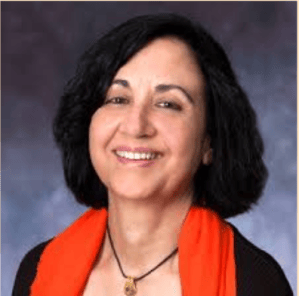 is a Senior Scholar in Residence in the Department of Sociology and in the Center on Health, Risk and Society at American University. She received her M.A. and Ph.D in Sociology from Stanford University. Her research has focused on cross-national issues of race and ethnicity, social movements, disasters, civil society, gender inequalities, water and sanitation deprivation, and menstrual health and hygiene. Her primary field work has been in various regions of India and Turkey. She has published in numerous peer-reviewed journals. Her most recent publication, “Global Health Priorities and the Neglect of Menstrual Health and Hygiene: The Role of Issue Attributes,” was published in Sociology of Development.
Council Member, Marilyn Grell-Brisk is an interdisciplinary scholar who examines historical and long-term roots of global structural inequality. She studies the connections between the local and global imaginaries of power and hierarchy, racism, and the legacies of colonialism that lead to contemporary asymmetric appropriation of global wealth and power. Dr. Grell-Brisk is particularly interested in how these affect Black and Indigenous peoples across the diaspora, as well as how they inform the possibilities for Black and Indigenous futures and how folx resist, and persist under the conditions of modern racial capitalism. Her current research projects center Black and Indigenous ways of knowing and understanding the world, as well as Black and Indigenous futurity pursued through community-building and place-making.
She is a faculty member in the Organizational Studies Field Group and Faculty Director of Community Engagement at Pitzer College, a member of the Claremont Colleges Consortium. Her most recent publications in collaboration with the 2024 AnDINA cohort are titled “With knowledge comes responsibility: increasing conservation scientists’ impact in a time of global crisis” published in Conservation Letters and “Strengthening responsibilities to face global crises: A call to ecologists, environmental scientists, and their societies” published in People and Nature. She also recently published a chapter in in the Oxford Handbook of Climate Action edited by Paul Almeida titled, “The Logics of Antiblackness and Coloniality in the Push for Climate (In)Action.”
Council Member, María Ximena Dávila is a Ph.D. candidate in Sociology at the University of Texas at Austin. Her research examines the interplay between gender, development, violence, and the politics of care and welfare in Latin America. Her dissertation specifically asks how risk and violence become woven into the intimate domains of reproduction, motherhood, and the family. Drawing on ethnographic and historical research, she traces how domestic life, gender roles, and everyday forms of risk management are reshaped by dispossession, environmental collapse, and the aftermath of armed conflict.
María is also a human rights lawyer and has worked extensively on women’s rights in the Americas, with a focus on advancing sexual and reproductive justice.
Council Member, Catherine van de Ruit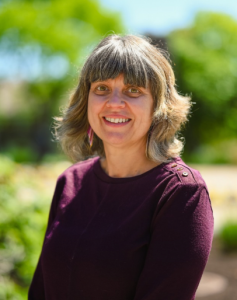 is an associate professor of sociology at Ursinus College. Catherine’s research focuses on health care workers and organizations. Her teaching and research on health organizations and systems in both the United States and Southern Africa focuses on the ways in which racial and gendered health disparities are reproduced through health policy and the structure of health care systems. Catherine is currently working on a book project titled Outsourcing obligation: The Organization of South African AIDS care, and is a Co-Principal Investigator on a project titled: Biosocial Factors and Perinatal Care for Patients Living with HIV in Philadelphia funded by the Pennsylvania Department of Health and in collaboration with Drexel University’s College of Medicine.
Updates

Feminist in Development ASA Social, New York, August 2026

Feminist Development Council Meeting, Wayne State University, October 2017
Newsletters
2026 Summer/Fall Feminist in Development Newsletter
2025-2026 Fall/Winter Feminist in Development Newsletter
Some Feminist Development Topics
- Gender ideologies
- Women’s reproductive rights
- Female-headed households
- Intrahousehold inequalities
- Violence against women and girls
- Neoliberal economic policies
- Women’s labor force participation
- Microfinance
- Gender mainstreaming
- The whiteness of development
- Educational attainment
- Sustainable development
- Female political leadership
- CEDAW and women’s human rights
- Gender budgeting
- Migration and development
- Sexual orientation and gender identity
- Ecofeminism
- Women and technology
- Masculinity and development
- Neocolonialism
- Transnational feminism
- Intersectionality
- Participatory development
Founding Members of Feminist Development
Rae Lesser Blumberg, University of California San Diego; Jennifer Keahey, Arizona State University; Kristy Kelly, Columbia University | Drexel University; Rebecca Kruger, Columbia University; Susan Lee, Boston University; Ann Oberhauser, Iowa State University; Farhana Sultana, Syracuse University; Yvonne Underhill-Sem, The University of Auckland; Mildred Warner, Cornell University; Barbara Wejnert, University at Buffalo

Feminist Development Subsection Formation Meeting, Cornell University, October 2016
References
Bastia, Tanja. 2014. “Intersectionality, Migration and Development.” Progress in Development Studies 14(3):237-48.
Boserup, Ester. 1970. Woman’s Role in Economic Development. London: George Allen & Unwin.

